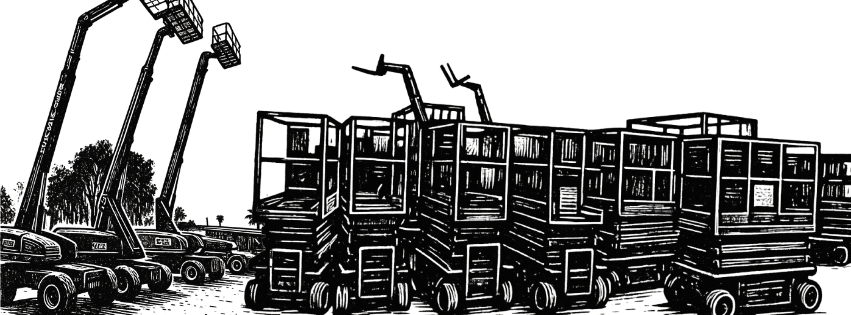
Most buyers assume used equipment pricing is based mainly on age and hours. In reality, the market is more nuanced than that. Two machines with identical model numbers can differ in value by tens of thousands of dollars depending on condition, service history, regional demand, and even attachment configuration. Understanding how equipment is actually valued helps buyers recognize a fair deal — and avoid paying full price for machines that only appear inexpensive.
01
Age & Hours Are the Starting Point — Not the Final Answer
Year, make, model, and hour meter are the first things dealers and buyers look at because they establish the machine's baseline market category. All else equal, lower hours increase value, newer equipment commands more, and premium brands retain value better over time. But hours alone are misleading, and experienced buyers know it.
A 6,000-hour rental fleet machine that received quarterly PMs and was never abused may be in better working shape than a 2,500-hour machine that spent those hours in a demolition yard with deferred maintenance and an indifferent operator. Hours help establish where a machine falls in the market range. Condition determines where it lands within that range.
Think of It This Way
Hours tell you how long the engine has been running. They don't tell you how it was run, who was operating it, or whether anyone was paying attention to the maintenance schedule while it did.
02
Condition Has the Biggest Influence on Price
Condition is often the single largest pricing adjustment factor on any used equipment transaction. Buyers, dealers, and appraisers all look at structural integrity, hydraulic performance, undercarriage or tire wear, engine behavior, and the overall care evident in how the machine was maintained and operated.
A machine with smooth operation, tight pins and bushings, clean fluid history, and good tires or tracks typically commands a meaningful premium over a comparable unit that shows leaks, fault codes, structural damage, or obvious deferred service. The premium is real, and it's usually justified — the cleaner machine costs less to put back to work.
One way to think about it: a clean machine sells faster, but a mechanically healthy machine holds its value better. Buyers chasing the lowest sticker price often end up owning the machine that looked cheap and cost more in the first six months.
03
Brand Reputation Affects Resale Value
Not all equipment brands depreciate at the same rate. Brands with strong dealer networks, reliable parts availability, and long-standing reputations for durability consistently command stronger resale values than lesser-known or discontinued lines — even when the underlying machines are mechanically comparable.
In aerial work, JLG and Genie hold value well in most markets. Toyota forklifts carry a premium that tends to stick through multiple ownership cycles. Caterpillar skid steers and telehandlers regularly outperform the market on resale. This isn't brand loyalty for its own sake — it reflects practical realities. Parts are easier to find. Technicians are familiar with the machines. Operators have used them before. Buyers are willing to pay more for that familiarity and confidence.
If you're considering a brand outside the mainstream, that isn't automatically a problem. But factor in parts availability and local service support before assuming the price difference represents pure savings.
04
Supply & Demand Move the Market Constantly
Used equipment pricing is not static. It tracks the broader construction economy, fleet management cycles, financing conditions, and regional activity. Prices rise when new equipment lead times stretch out, construction activity is strong, rental fleets hold inventory longer, or interest rate conditions favor used purchases over new. They soften when large fleet disposals hit the market, construction slows regionally, or financing tightens.
This is why the "book value" on a piece of equipment and its actual selling price in the current market are often meaningfully different. Published guides establish a reference range, but fair market value is ultimately determined by what informed buyers are actively willing to pay right now — not what the last edition of a pricing guide printed before conditions changed.
Watch Auction Results
Auction results are one of the most reliable windows into what equipment actually sells for — not what it's listed at. If you can find recent auction data for the category you're shopping, it will tell you more about actual market conditions than any asking price on a dealer lot.
05
Attachments & Configuration Matter More Than Most Buyers Realize
Two machines with the same model number can vary significantly in value based on how they're configured. High-flow hydraulics on a skid steer, foam-filled tires on a boom lift, an enclosed cab package, a fork positioning system, or a lithium battery pack versus lead-acid — these aren't just features. They are value drivers that directly affect what a machine is worth in the used market.
Desirable configurations that match common buyer demand can meaningfully increase resale value. A telehandler with a full suite of attachment capabilities and documented load charts is worth more than the same model stripped bare. A scissor lift with recently foam-filled tires eliminates a repair cost that would otherwise land on the buyer — and gets priced accordingly.
The flip side is also true: highly specialized or uncommon configurations can narrow the buyer pool and make a machine harder to sell at market rate. Before paying a premium for specialty equipment, make sure the configuration matches what you actually need — not just what was available.
06
Maintenance Records Increase Buyer Confidence — and Price
Documented service history directly affects pricing because it reduces uncertainty. A machine with dealer service records, regular PM documentation, and clear notation of any major repairs justifies a higher asking price — not because the seller is being aggressive, but because buyers in this market are pricing risk as much as equipment. A machine with unknown history forces buyers to assume deferred maintenance, potential failures, and hidden repair costs. Sellers who can eliminate that assumption have leverage, and they use it.
Service records don't just document maintenance — they help establish trust. And in a category where a single undisclosed repair can cost more than the margin between two competing offers, trust has real dollar value.
That said, it's worth understanding what you can reasonably expect from different types of sellers. Large dealers and rental companies — often the best-maintained sources for used equipment — are typically not going to hand over complete service work orders. Their internal documentation includes parts pricing, labor rates, and vendor costs that they have legitimate business reasons to keep proprietary. Pushing for full shop records from that kind of seller is usually a dead end.
What you should ask for — and what any reputable dealer or rental house should be able to provide — is a summary of what was done and when. PM intervals, major component replacements, any significant repairs to hydraulics, drivetrain, or structural components. That's the actual information you need to evaluate the machine. A seller who can walk you through that history, even informally, is telling you something meaningful. A seller who can't tell you anything at all about a machine's background is also telling you something — and it isn't reassuring.
07
How Fair Market Value Is Actually Determined
Fair Market Value — FMV — is not a fixed number. It's an estimated value based on comparable recent sales, auction results, dealer listings, equipment condition, regional demand, and current market trends. FMV assumes a willing buyer, a willing seller, and neither party being forced into the transaction. Dealers, lenders, insurers, and appraisers typically use multiple data sources together to arrive at a working number.
One of the most persistent misconceptions in this market is that asking price equals market value. It doesn't. Many online listings are optimistic, negotiable, and priced above what similar machines actually sold for in recent transactions. Actual transaction values — especially from auction data and wholesale deals — tell the real story of where the market is. If you're paying a dealer retail price, you're paying a premium over that baseline, and that premium is supposed to buy you something: reconditioned condition, a warranty, financing options, or some other form of reduced risk. If you can't identify what the premium is buying, that's worth pressing on.
Asking Price ≠ Market Value
A machine sitting on a lot for six months with no price reductions isn't evidence of high value. It's evidence that the asking price hasn't found a buyer yet. Be willing to use that information in a negotiation.
Bonus
The Cheapest Machine Is Rarely the Cheapest to Own
A low purchase price can disappear fast if the machine immediately needs tires or tracks, hydraulic repairs, a battery replacement, engine work, or a major service catch-up. Experienced buyers think in terms of total ownership cost — what the machine costs to acquire plus what it costs to make reliable — not just the initial number on the sticker.
The machines at the bottom of the market are usually priced there for a reason. Sometimes that reason is a motivated seller with a clean unit who just needs it gone. More often, it reflects deferred maintenance, undisclosed condition issues, or a configuration that limits resale appeal. Knowing the difference is what separates a good deal from an expensive lesson.
Used equipment pricing is ultimately a balance of condition, demand, risk, and replacement cost. The smartest buyers focus less on finding the cheapest machine — and more on finding the best value.