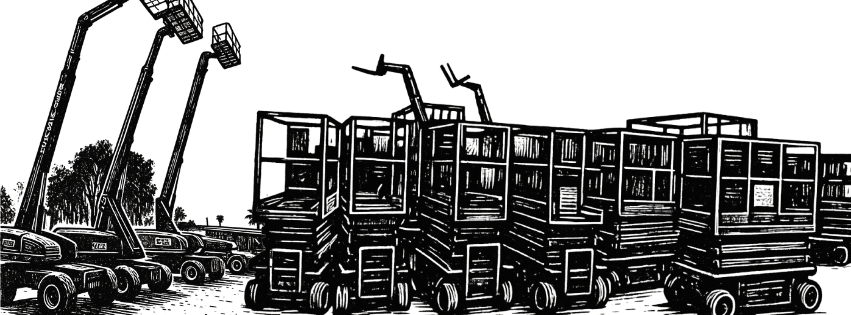
A used scissor lift can be one of the smartest equipment purchases you make — or one of the most expensive lessons you learn. The difference usually comes down to what you check before you hand over the money. This guide covers the six things that actually matter when evaluating a used electric scissor lift, plus the one test every buyer should run before signing anything.
01
Batteries — Start Here
The battery pack is the single most expensive component on an electric scissor lift — or a close second. A replacement set can run anywhere from $1,500 to $4,000 or more depending on the machine, and that cost will hit you fast if you skip this inspection.
When you're looking at a unit, check three things: the physical condition of the batteries, their charge state, and how old they are. Swollen, corroded, or leaking cells are an immediate red flag. A well-maintained machine should have clean battery terminals with no heavy buildup and cells that sit level and secure in the tray.
Charge state tells you something too — if a machine has been sitting on a lot for months with dead batteries, that shortens their remaining life. Ask when it was last charged and if it holds a charge through a full work cycle.
Age is the most important factor. Most scissor lift batteries have a useful life of 4–6 years with proper maintenance. If the seller doesn't know how old they are, that's a data point in itself.
Watch Out
A seller who charges the unit right before you arrive to "show it working" may be masking a battery that doesn't hold charge. Ask to see it after sitting for a day if you're serious about a purchase.
02
Hoses and Hydraulic Lines
Walk the machine and look at every hydraulic hose you can see. You're looking for cracking, dry rot, abrasion wear, or any signs of weeping fluid around the fittings. A hose that looks cracked or brittle is living on borrowed time.
Pay particular attention to hoses that run along the scissor stack — these flex every time the machine cycles and wear faster than static lines. Look for spots where a hose might be rubbing against a metal edge.
Quick Check
Run your finger along the underside of hoses near fittings. Any oily residue or staining on surrounding surfaces indicates a slow leak that'll become a real problem under load.
03
Control Box and Connection Pins
The control box — particularly the platform control box — is another frequently replaced component that adds up fast. These take a beating in the field: dropped, rained on, run into things. Replacement cost varies by manufacturer but $500–$1,500 for a quality unit is not unusual.
Inspect the housing for cracks or impact damage. Then look closely at the connection pins where the cable meets the box. Bent, corroded, or missing pins are a common issue and can cause erratic behavior or complete control failure. This is worth examining carefully because it's the kind of thing sellers don't always flag.
Check both the platform control box and the ground control panel. Toggle each function — even if you can't fully operate from the ground — and watch for any switches that feel sticky, loose, or unresponsive.
04
Frame, Deck, and Scissor Stack
Step back and look at the whole machine. The frame rails should be straight with no visible bending or weld repairs. Bent frame rails usually mean the machine has been dropped or driven off a loading dock — and that kind of structural damage affects more than what you can see.
The working deck should be flat and solid with no soft spots or obvious patch repairs to the decking material. Check the toe boards and guardrails — they should be intact and secure. Missing or bent guardrails are a safety issue and may mean the machine fails inspection at a job site.
On the scissor stack itself, look at the condition of the pivot pins and the wear pads. These components carry the load every time the platform extends, and excessive wear here translates into slop and instability at height. A small amount of play is normal; significant movement when you physically push on the stack is not.
05
The Inverter — Know the Limitation
The inverter controls how the machine draws power from the battery pack and distributes it to the drive and lift systems. When it fails, the machine may operate erratically, lose power unexpectedly, or stop working altogether.
Here's the honest reality: it's very difficult to fully test an inverter just by operating the machine on a lot. It may function fine in short cycles and still fail under sustained load on a job site. You can't always see it and you can't always test for it.
Know Before You Buy
If a deal is large enough to justify it, ask for a service history or consider having a technician do a pre-purchase inspection. For smaller purchases, factor inverter replacement ($800–$2,000+) into your risk calculation when evaluating price.
06
The Operational Test — Don't Skip This
Before you make any decision, get on the machine. Turn it on. Operate it. This is non-negotiable.
Drive it forward and backward — it should move smoothly and responsively in both directions with no hesitation or pulling to one side. Check that the brakes engage cleanly when you release the drive.
Then raise the platform. Watch how it goes up. A platform that rises too slowly can indicate a pressure issue — either a leak somewhere in the hydraulic system or a pressure relief valve that isn't fully closing. Either one means work and money before the machine is reliable.
A platform that rises too quickly is a different problem — it could indicate the pressure has been cranked up to compensate for something else, which puts more stress on hoses and seals.
Lower it back down, watching for any jerking or uneven descent. Then raise it again and walk around the machine while it's elevated — look for any hoses that are pulling tight, any hydraulic fluid weeping at fittings under pressure, or any unusual sounds from the pump.
If the seller won't let you operate the machine, that's your answer.
Pre-Purchase Inspection Checklist
Pull this up on your phone at the lot. Check everything before you commit.
Batteries
Hoses and Hydraulics
Control Box
Frame and Structure
Operational Test
07
What to Expect to Pay
Used electric scissor lift pricing varies significantly based on platform height, age, hours, and condition. As a general reference for standard indoor electric units in reasonable condition:
19–26 ft electric scissor lifts from 2016–2020 with under 500 hours typically range from $4,000–$10,000. Rough terrain models and larger platform heights command more. Units with battery issues, control problems, or structural damage should be priced significantly lower — and if they're not, that's a negotiating point.
The battery condition alone can swing value by $2,000–$3,500 on a mid-size unit. If the batteries are at end of life, factor in replacement cost before you evaluate the asking price.